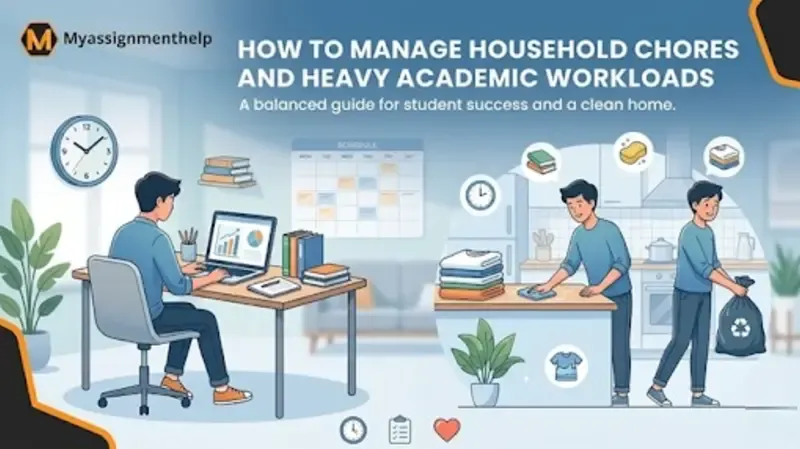
How to Manage Household Chores and Heavy Academic Workloads
Moving out of a structured family home and into an independent university setup is a massive milestone. For many undergraduate students, it is the first real taste of freedom. However, that freedom comes with a sudden, overwhelming reality check: the sheer volume of daily maintenance required to keep a household running. When you combine grocery shopping, meal prep, laundry, and deep cleaning with a rigorous university syllabus, the mental load can quickly become exhausting. Finding a sustainable equilibrium between these domestic tasks and your GPA is not just about working harder; it requires a strategic, systematic overhaul of how you manage your time and your physical environment.
The primary challenge stems from the fact that both academic deadlines and domestic chores tend to peak at the exact same moments. Midterm exams inevitably coincide with a pile-up of laundry, and finals week usually arrives just when the kitchen sink is overflowing. When stress levels rise, cognitive performance drops. If your study environment is chaotic, your brain spends unnecessary energy processing that clutter rather than focusing on complex research data. While it is tempting to simply lock yourself in your room and ignore the dishes, outsourcing routine pressures is often the most practical way to clear your mental bandwidth. For instance, knowing where to turn when you need someone to write my paper for me cheap can instantly alleviate immediate academic pressure, giving you the breathing room required to restore order to your living space and get back on track.
The Psychology of Space: Why Clutter Kills Productivity
Environmental psychology shows a direct correlation between spatial organization and cognitive load. When your living and study spaces are disorganized, your brain receives constant visual cues that there is unfinished work to be done. This phenomenon, often referred to as “visual pollution,” triggers the continuous release of cortisol, the body’s primary stress hormone.
For an undergraduate student trying to parse complex academic journals or write multi-page reports, a high-stress environment drastically reduces memory retention and focus.
The Split-Space Method
To combat this, successful students utilize the “Split-Space Method.” This involves strictly dividing a small room or apartment into dedicated zones:
- The Deep-Work Zone: A desk or table kept entirely free of food wrappers, dirty clothes, and non-academic items. The only objects permitted here are your laptop, notebooks, and a desk lamp.
- The Decompression Zone: Your bed or a comfortable chair designated exclusively for rest, socializing, or reading for pleasure.
- The Maintenance Zone: Areas like the kitchen counter or bathroom that require daily upkeep to prevent the buildup of bacteria and bad odors.
By keeping these zones physically and mentally separate, your brain automatically switches into the correct mindset the moment you enter them. You will find it much easier to focus at your desk if your eyes aren’t constantly drifting over to a basket of unguided laundry.
Constructing the Blueprint: The Academic-Domestic Matrix
Managing a household alongside a heavy course load is impossible without a structured visual plan. Relying on mental reminders guarantees that something important will eventually slip through the cracks. To prevent this, you should categorize your domestic responsibilities by their required frequency and align them with your academic schedule.
The table below outlines a modular framework designed to balance routine household chores against varying levels of academic intensity throughout a typical university semester.
| Frequency | Household Task | Estimated Time Required | Academic Alignment Strategy |
| Daily | Dishwashing, surface wiping, bed-making, trash removal. | 15–20 minutes | Use these short tasks as active brain breaks between intensive 90-minute study sessions. |
| Weekly | Floor vacuuming/mopping, laundry, bathroom sanitation, grocery shopping. | 2–3 hours total | Batch these tasks together on a specific “low-intensity” day, such as Sunday morning, to clear the upcoming week. |
| Monthly | Deep kitchen cleaning, appliance maintenance, window washing, wardrobe sorting. | 2 hours | Schedule these during academic valleys, such as the weeks immediately following midterm exams. |
| Seasonal | Moving winter/summer clothes, deep carpet cleaning, organizing digital files. | 3–4 hours | Execute these exclusively during university reading weeks or semester breaks. |
High-Yield Time Management Tactics for Students
Once you have categorized your chores, the next step is integrating them seamlessly into your daily routine using proven time-management frameworks.
The Pomodoro Domestic Twist
The Pomodoro Technique is widely celebrated for academic study, but it is equally effective for household management. Instead of spending an entire Saturday cleaning your apartment, break the work down into small, manageable intervals throughout the week.
Study intently for 50 minutes, then set a timer for 10 minutes. Instead of scrolling through social media during your break, use those 10 minutes to load the washing machine, take out the trash, or wipe down the kitchen counters. This active movement increases blood circulation, clears your head, and ensures your home stays clean without eating into your dedicated study time.
Task Batching and Meal Prep
One of the biggest time-sinks for independent students is daily meal preparation. Cooking a fresh meal from scratch three times a day, combined with the subsequent cleanup, can easily consume up to two hours daily.
[Traditional Daily Cooking] –> Requires 1.5 to 2 Hours Every Single Day
[Batch Cooking (Sundays)] –> Consumes 2 Hours ONCE + 5-Minute Reheats Daily
By transitioning to batch cooking on Sundays and Wednesdays, you prepare bulk portions of proteins, grains, and vegetables that can be quickly combined throughout the week. This reduces your daily kitchen footprint to a simple five-minute reheat, saving you hours of chopping, cooking, and dishwashing during high-stress weekdays.
Scaling Up: Transitioning to Advanced Academic Demands
As you progress through your undergraduate career, the nature of your academic workload changes. Early semesters focus heavily on broad foundational knowledge and short-form essays. However, upper-level courses and subsequent postgraduate aspirations demand an entirely different level of academic rigor. The transition from general coursework to specialized professional paths requires precise, high-stakes documentation that leaves zero room for structural errors or weak arguments.
When you are preparing crucial applications or final year profiles, the stakes are incredibly high. Balancing these life-altering milestones with everyday chores becomes a massive logistical challenge. During these critical crossroads, smart students realize that seeking specialized guidance from an expert mba admission essay writing service through trusted resources from Myassignmenthelp is a vital step in protecting their professional future. Relying on verified academic specialists to refine your elite statements ensures your portfolio meets global standards, allowing you to focus your physical and mental energy on keeping your daily environment stable and stress-free.
Setting Boundaries in Shared Student Housing
If you live in a shared apartment or a university residence hall, managing household chores becomes a collective responsibility. Conflict over cleanliness is one of the leading causes of roommate stress, which directly impacts your ability to study peacefully at home.
The Clear Communication Protocol
To avoid passive-aggressive notes and mounting tension, establish a clear chore rotation system from day one. Do not rely on vague agreements like “we will all just clean up after ourselves.” Instead, use a physical or digital chore wheel that rotates weekly.
Keep communication objective and performance-based. If a roommate falls behind on their designated tasks because of an upcoming exam, allow them to trade weeks with someone else rather than letting the chore sit undone. Collaborative flexibility ensures that the shared living environment remains a supportive sanctuary for everyone involved rather than a source of toxic friction.
Micro-Habits That Keep Chaos at Bay
Ultimately, the secret to maintaining a clean home during a heavy academic semester lies in the execution of tiny, effortless daily habits. When these micro-habits become second nature, your home essentially cleans itself, eliminating the need for massive, exhausting deep-cleaning sessions.
- The Two-Minute Rule: If a household task takes less than two minutes to complete—such as putting your shoes away, wiping a spilled drop of coffee, or filing a receipt—do it immediately.
- The One-Touch Principle: Avoid moving an object from one temporary location to another. If you bring a cup into your room, do not place it on your nightstand; take it directly to the kitchen sink.
- Nightly Reset: Spend exactly five minutes every evening before bed clearing your primary desk space and packing your backpack for the next day. Waking up to a clean, organized workspace sets a positive, productive tone for the entire morning.
By combining these spatial strategies, visual frameworks, and targeted academic support networks, you can easily break the exhausting cycle of academic and domestic burnout. Taking control of your environment is the first definitive step toward mastering your education.
Frequently Asked Questions (FAQ)
Q.1. How do I stop procrastinating on studying by cleaning my house instead?
Ans: This is known as “proproductive procrastination.” To stop it, set strict boundaries using a timer. Allow yourself a maximum of 10 to 15 minutes of cleaning as a physical reward after you have completed a solid block of deep studying. Never let cleaning serve as the barrier that delays the start of your study sessions.
Q.2. What should I do if my roommate refuses to do their share of the chores?
Ans: Hold a brief, polite house meeting to review the shared chore schedule. Frame the conversation around mutual academic success, explaining that an unorganized space increases stress for everyone. If direct communication fails, look into involving your student housing office or establishing small house rules, like using disposable bio-degradable tableware during finals week to limit dish pile-ups.
Q.3. Is it possible to keep a clean apartment during exam weeks without failing?
Ans: Yes. During peak exam weeks, intentionally lower your domestic standards to “maintenance mode.” Focus exclusively on health-essential chores: washing dishes daily, taking out the trash, and doing one basic load of laundry. Leave deep cleaning, dusting, and organizing for the post-exam period when your schedule clears up.
About The Author
My name is Thomas Taylor, and I am an academic consultant and content strategist at MyAssignmentHelp. With years of experience guiding undergraduate and postgraduate students through complex university curricula, I specialize in developing actionable time-management frameworks and productivity strategies.