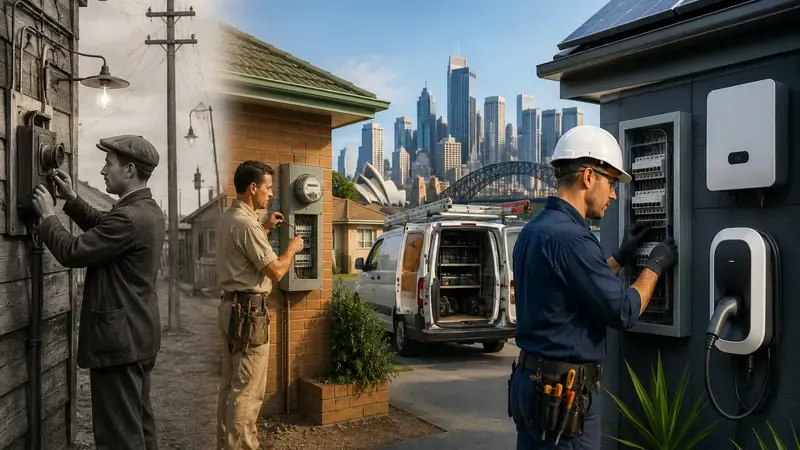
In the last decade, the electrical industry in Australia has experienced significant changes. Companies like Florance Electrical have had to adapt their service offerings to keep pace with advances in technology, new energy regulations, and the rise of renewable energy sources.
The installation of solar panels, as well as battery storage units, have become greatly sought-after types of electrical work for electricians. A specialised skill set developed over time is now required for both of these types of electrical work, unlike what would normally be found from electricians in the past. Many companies have taken the lead in this space by being some of the first to provide customers total renewable energy solutions. In addition, demand for off-grid and hybrid energy systems has grown, particularly in regional areas where energy reliability and cost savings are major concerns. These systems often require careful design, load balancing, and ongoing maintenance to ensure optimal performance and long-term efficiency.
Automated light control systems, climate control systems, electric vehicle (EV) charging stations, and smart metering represent the future of how homeowners will use integrated systems from their homes to create a smart home through the installation and maintenance of these integrated electronic systems by professionally trained individuals. These technologies allow users to monitor and control their energy usage in real time, improving both convenience and efficiency. Smart home integration also enables better energy management by automatically adjusting lighting, heating, and cooling based on occupancy or time of day, which helps reduce unnecessary consumption.
Energy efficiency improvements are at the forefront of both residential and commercial operators’ agendas. Projects that are commonly completed include the replacement of outdated circuit wiring and boards, and the installation of LED lighting systems, all of which will reduce energy costs and increase safety in the long run. In many cases, businesses are also investing in energy audits to identify inefficiencies and prioritise upgrades that deliver the highest return on investment. These improvements not only lower operational costs but also contribute to sustainability goals and reduce environmental impact.
Australia’s electrical industry is impacted heavily by regulatory compliance. Electrical work can only be performed by qualified electrical workers, and all work must comply with applicable codes and standards. Reputable Australian companies implement compliance with required standards and can provide their clients with Certificates of Compliance giving them peace of mind that their installations have been installed in accordance with legal requirements. These regulations are essential for ensuring safety, reliability, and accountability across all electrical installations, particularly in high-risk environments such as commercial buildings and industrial sites.
As Australia continues to move towards a more sustainable, low-carbon future, the amount of qualified electrical service providers will continue to increase. By partnering with an innovative and progressive electrical contractor, homeowners and business leaders will be able to take advantage of new technologies and improve their energy efficiency. This ongoing transformation is expected to create new career opportunities within the electrical sector while also driving further innovation in renewable energy integration, smart infrastructure, and sustainable building practices across the country.